

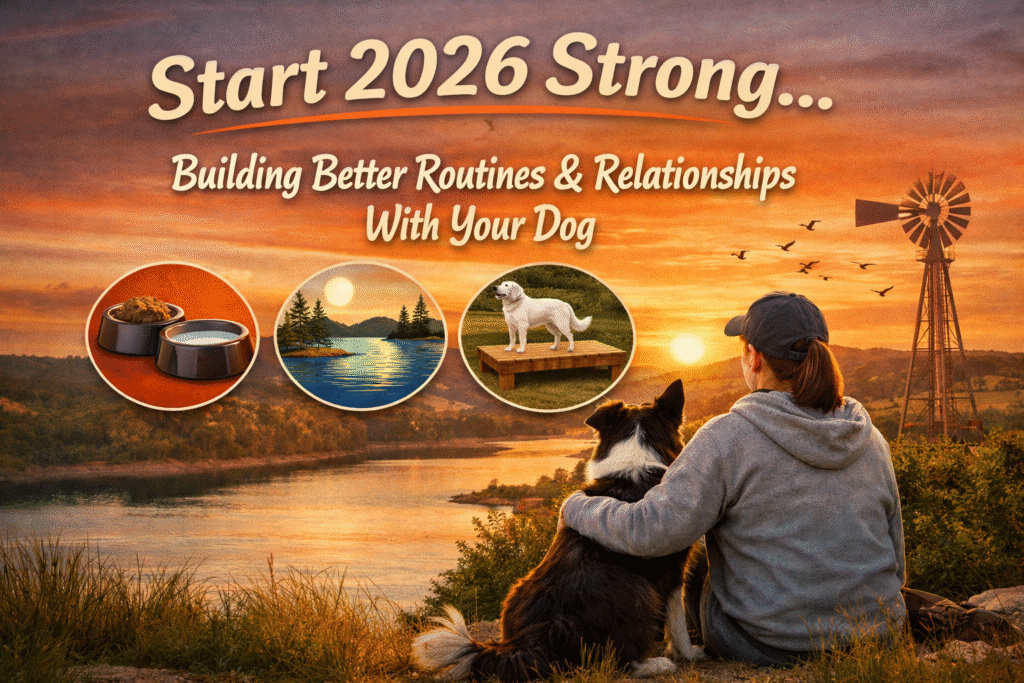
Starting 2026 Strong: Building the Best Possible Relationship With Your Dog 🐾
The New Year often brings fresh goals, renewed motivation, and—let’s be honest—a little recovery from the holiday chaos. Whether you’re settling back into routine with a seasoned dog or starting 2026 with a brand-new puppy, now is the perfect time to refocus on what really matters: building a strong, healthy relationship with your dog.
At Next Step K9 Center, we believe great training starts long before “sit” and “stay.” Here are a few key areas to focus on in 2026 to guide you toward a calmer home, a happier dog, and a relationship built on trust and understanding.
1. Focus on Routines and Building Solid Patterns
Dogs thrive on predictability. More than obedience commands, it’s the patterns and routines of daily life that help dogs feel safe and confident. These are the moments that happen between formal training sessions—and they matter a lot.
Simple routines can include:
- Waiting politely at thresholds before going outside
- Sitting calmly while doors open
- Consistent morning and evening feeding routines
- Clear kitchen or household boundaries
- Regular long walks or “sniffaris” that allow your dog to decompress and explore
When dogs know what to expect, they’re better able to regulate their behavior. Routines create clarity, reduce stress, and set your dog up for success throughout the day.
2. Set Realistic Expectations (and Let Go of Comparison)
It’s easy to look at other dogs and think, “My dog should be doing that.” Social media doesn’t help with this.
But here’s the truth:
Not every dog is a social butterfly.
Not every dog loves group classes or competitive sports.
And that’s okay.
Instead of chasing what you think you should be doing, focus on what you and your dog genuinely enjoy together. If you love obedience or a dog sport—great! If your favorite thing is quiet walks around the lake or hiking trails, do more of that in 2026.
The best relationship isn’t built on comparison—it’s built on shared joy.
3. Consider Your Dog’s Genetics and Environment
Training doesn’t exist in a vacuum. Your dog’s genetics and environment play a huge role in their behavior and overall wellbeing.
Ask yourself:
- What was my dog bred to do?
- Does their environment allow them to express those instincts in healthy ways?
For example, have a Livestock Guardian Dog living in town? They may still need opportunities to observe, survey, and feel “on duty.” Something as simple as an elevated platform or a quiet lookout space can help meet that need.
Meeting a dog’s welfare and enrichment needs is one of the most powerful tools we have for behavior mitigation. Sometimes the solution isn’t more training—it’s better enrichment, environmental changes, or outlets that align with your dog’s natural instincts.
4. Make Training About the Relationship
Effective training is about more than teaching skills—it’s about engagement and connection.
Be consistent.
Be fair.
Be fun.
(No one—dogs included—enjoys a drill sergeant.)
Training should feel like a conversation, not a command. Pay attention to what your dog enjoys and let them teach you, too. Tricks count as training and come with the added bonus of being fun for both of you.
When training strengthens your relationship, progress comes naturally.
Ready to Start 2026 on the Right Paw?
If you’re not sure where to begin, or you’d like help building routines, setting realistic goals, or strengthening your relationship with your dog, we’re here for you.
📞 Give us a call at Next Step K9 Center—we’d love to help guide you and your dog into a successful, connected, and fulfilling 2026.
Here’s to a New Year built on trust, understanding, and wagging tails. 🐕✨