

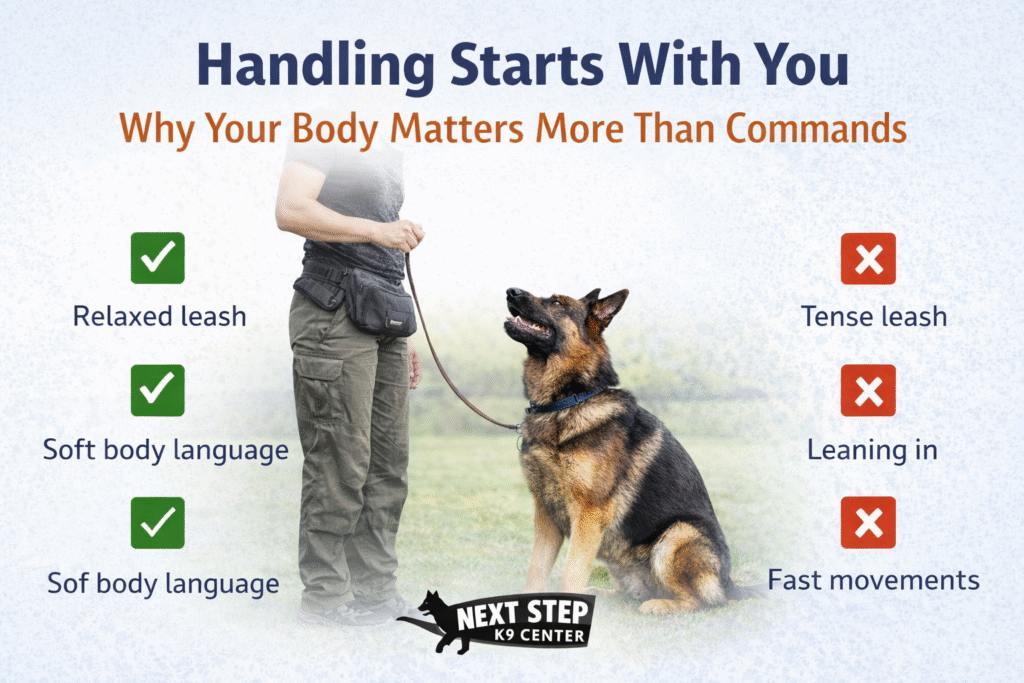
When most dog owners think about training, they think about commands—sit, stay, come, heel. But long before your dog processes a word, they are already responding to you. Your posture, movement, breathing, and tension tell your dog more than any verbal cue ever will.
If you want a calmer, more responsive dog in 2026, improving your handling skills is the place to start.
Dogs Read Bodies First, Words Second
Dogs are masters of observation. They evolved to survive by reading subtle changes in body language—both from other dogs and from humans. While we rely heavily on verbal language, dogs rely on movement, pressure, and predictability.
This is why many common training struggles aren’t actually obedience issues—they’re communication breakdowns.
Examples we see often:
- A dog that “ignores” commands but responds instantly when the handler shifts position
- A dog that becomes reactive when the leash tightens
- A dog that disengages when the handler looms or moves too quickly
Your dog isn’t being stubborn. They’re responding to information you may not even realize you’re giving.
Common Handler Mistakes That Create Confusion
Many well-meaning dog owners unintentionally apply pressure without meaning to. These small handling habits can increase stress, frustration, or over-arousal.
1. Looming Over the Dog
Leaning forward, hovering, or reaching over a dog can feel threatening—especially for puppies, sensitive dogs, or dogs working through behavior challenges.
2. Holding Tension in the Leash
A tight leash constantly communicates concern or urgency. Even slight, consistent tension can raise a dog’s arousal level and reduce their ability to think.
3. Fast, Jerky Movements
Quick movements often signal excitement or conflict to a dog. For dogs already struggling with impulse control or reactivity, this can push them over threshold.
4. Inconsistent Body Signals
Asking for calm behavior while your body is stiff, rushed, or frustrated sends mixed messages your dog can’t reconcile.
Neutral Handling: The Skill Every Dog Owner Needs
At Next Step K9 Center, we talk a lot about neutral handling. Neutral does not mean passive—it means clear, calm, and intentional.
Neutral handling includes:
- Standing upright with relaxed shoulders
- Soft knees and balanced weight
- Calm, steady breathing
- Purposeful movement instead of rushing
When your body is neutral, your dog has space to process information and make better choices.
Why Slowing Down Actually Speeds Up Training
Many behavior issues escalate because everything happens too fast—too many cues, too much movement, too much pressure.
Slowing your handling allows:
- Lower stress levels
- Better emotional regulation
- Clearer communication
- Faster learning
Dogs learn best when they feel safe and can predict what will happen next. Your handling plays a major role in creating that safety.
Try This: Awareness Exercise
During your next walk or training session:
- Take a breath before asking your dog for anything
- Soften your shoulders and loosen your grip on the leash
- Notice how your dog responds before you say a word
Many owners are surprised by how much changes when their body language does.
Great Training Starts With the Handler
Improving your handling skills isn’t about being perfect—it’s about becoming more aware. When your body language becomes clearer and more predictable, your dog doesn’t have to guess.
Next week, we’ll dive deeper into how to read the dog in front of you, so you can respond to what your dog is actually communicating—not what you wish they were doing.
Looking for help improving your handling skills or working through behavior challenges? Next Step K9 Center offers private lessons and behavior modification programs in Oklahoma designed to support both dogs and their people.