One of the best ways to build reliability in your dog’s training is by working through the 3 D’s:
- Duration – How long your dog can hold a behavior
- Distance – How far away you can be while your dog maintains the behavior
- Distraction – How well your dog performs despite challenges in the environment
Together, these three elements create resilience, focus, and confidence in your dog. Here’s how to put them into practice.
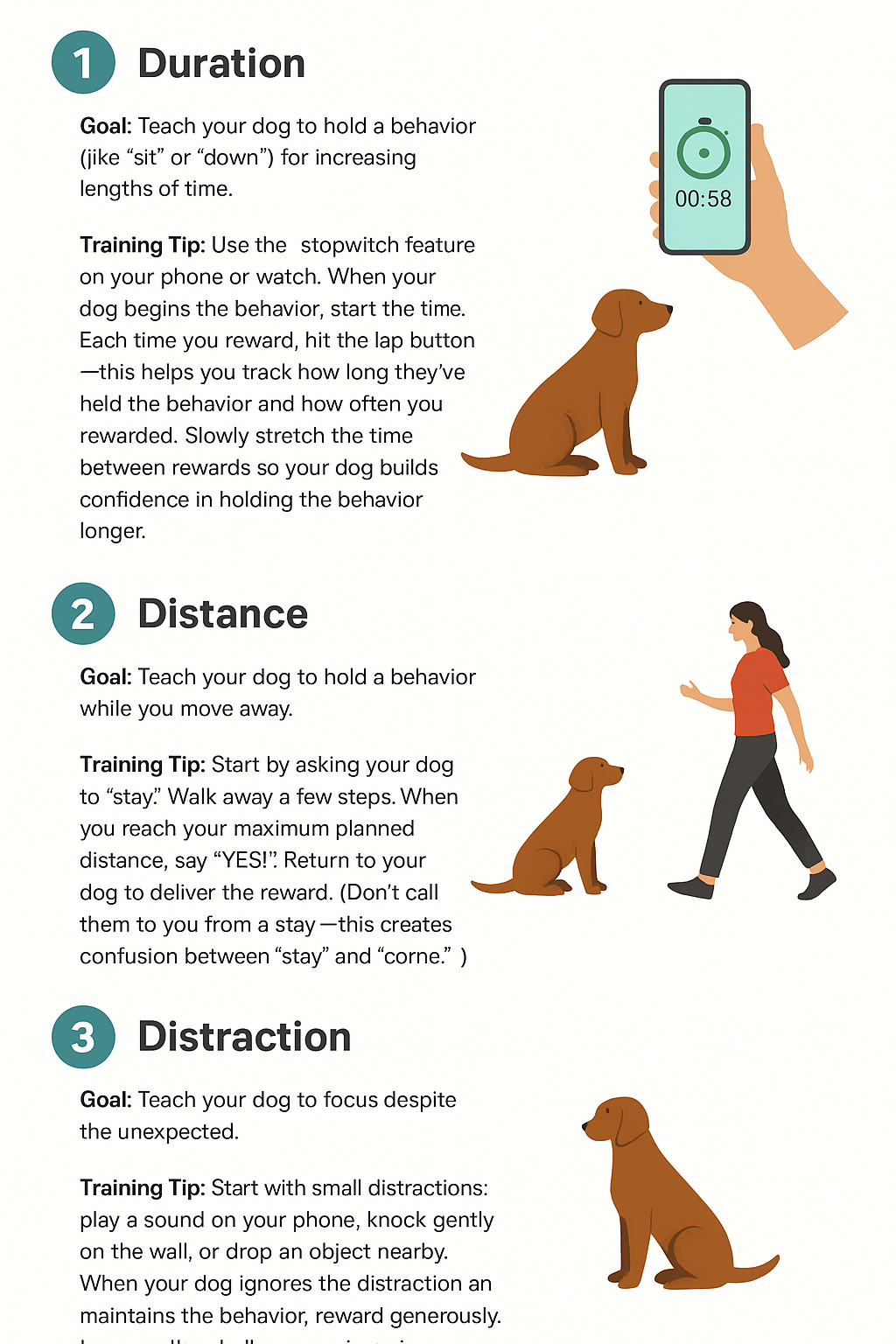
1. Duration
Goal: Teach your dog to hold a behavior (like “sit” or “down”) for increasing lengths of time.
Training Tip:
- Use the stopwatch feature on your phone or watch.
- When your dog begins the behavior, start the timer.
- Each time you reward, hit the lap button—this helps you track how long they’ve held the behavior and how often you rewarded.
- Slowly stretch the time between rewards so your dog builds confidence in holding the behavior longer.
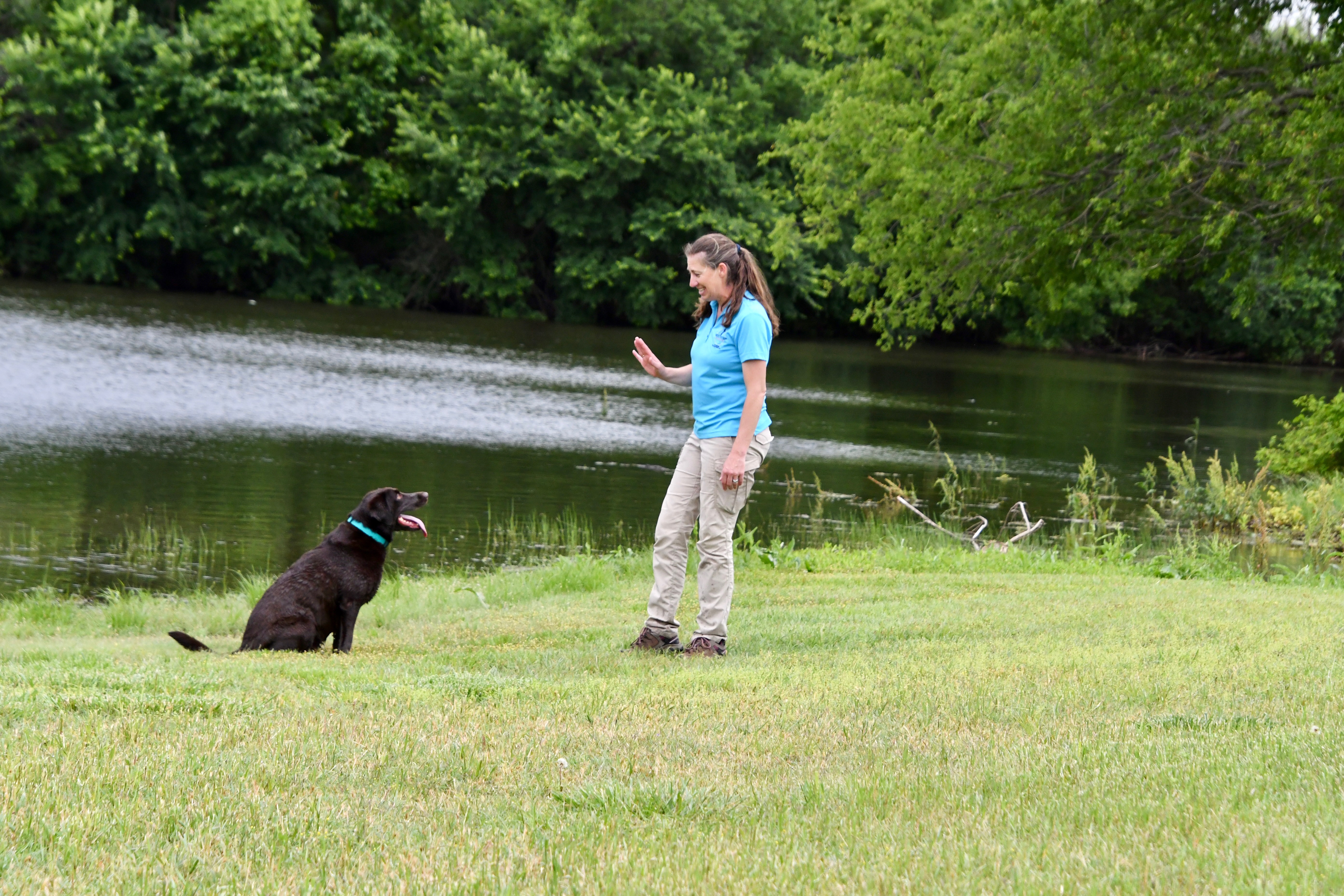
2. Distance
Goal: Teach your dog to hold a behavior while you move away.
Training Tip:
- Start by asking your dog to “stay.”
- Walk away a few steps. When you reach your maximum planned distance, say “YES!”
- Return to your dog to deliver the reward. (Don’t call them to you from a stay—this creates confusion between “stay” and “come.”)
- Gradually increase how far you can go while your dog maintains position.
3. Distraction
Goal: Teach your dog to focus despite the unexpected.
Training Tip:
- Start with small distractions: play a sound on your phone, knock gently on the wall, or drop an object nearby.
- When your dog ignores the distraction and maintains the behavior, reward generously.
- Increase the challenge by doing jumping jacks, clapping, or moving quickly around the room.
- Once your dog succeeds with you, add another person—or eventually, another dog—to the training environment.
Putting It All Together
When introducing the 3 D’s, remember: work on one at a time.
- Start with duration.
- When you add distance, make duration easier (shorter).
- Build those together, then ease both while you introduce distraction.
Think of it as balancing a scale: whenever you add difficulty in one area, make another area easier so your dog can succeed. Always circle back to review and strengthen earlier steps.
Final Thoughts
The 3 D’s aren’t about testing your dog until they fail—they’re about building resilience step by step. By gradually layering duration, distance, and distraction, you’ll create a dog who is confident, reliable, and ready for real-world success.
At Next Step K9 Center, we use the 3 D’s to meet dogs where they are, building skills through positive reinforcement, clear communication, and welfare-based training. With patience, timing, and consistency, your dog can learn to thrive no matter the environment.